LagosPortugalGuide.com
The best independent guide to Lagos
LagosPortugalGuide.com
The best independent guide to Lagos
Ponta da Piedade, Lagos: a guide to the cliffs and boat tours
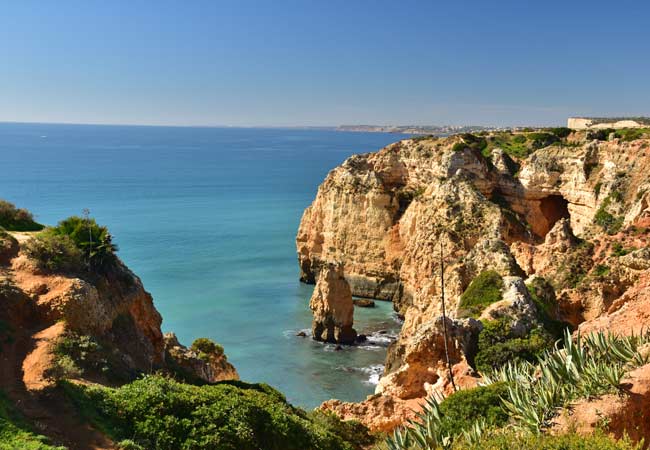
Golden limestone pillars rise from calm turquoise waters at Ponta da Piedade, one of the finest natural features of the Western Algarve. Situated at the southernmost tip of Lagos, this headland presents a labyrinth of weathered rock formations, hidden coves, and eroded sea caves, all sculpted by the relentless power of the Atlantic Ocean.
For centuries, this windswept promontory was a place of fear and fervent prayer. Its name, translating to "Point of Mercy," stems from the anxieties of the local fishing community. Here, on these high, exposed cliffs, wives and mothers would gather during storms, scanning the horizon whilst praying for divine mercy for their loved ones at sea.
Today, the danger has retreated, leaving behind a landscape ripe for exploration. Visitors can enjoy dramatic coastal views, descend stairs carved into the cliffs to reach hidden coves, and stroll along a scenic boardwalk that skirts the cliff edge.
However, the true magic of Ponta da Piedade reveals itself at water level, whether by small boat tour or guided kayak expedition. These vessels weave between towering pillars, venture into sea caves inaccessible from land, and land at secluded beaches.
The Ponta da Piedade stands as Lagos's premier attraction. This guide will demonstrate why it deserves a place on your itinerary and how to maximise your visit.
Highlights of the Ponta da Piedade
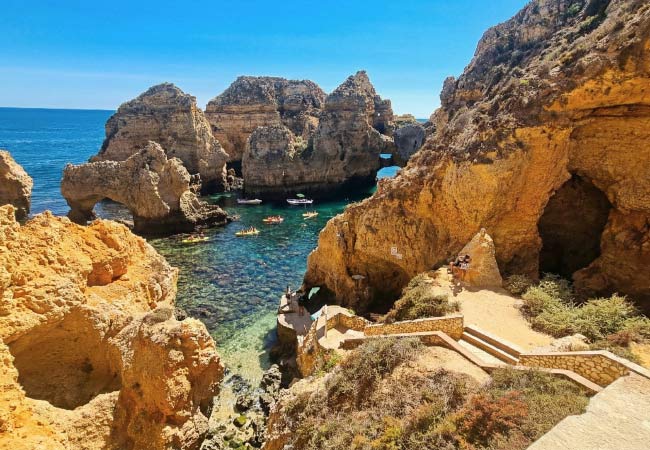
The staircase and hidden cove: One of the most visually stunning experiences in Lagos is the steep limestone staircase carved into the cliffs of Ponta da Piedade. These 181 steps wind their way down from the windswept headland, flanked by towering golden rock walls, until they reach a small, sheltered cove at the water’s edge. Once an anchorage for local fishermen seeking safety from the Atlantic, this hidden bay is considered one of the Algarve’s true natural wonders.
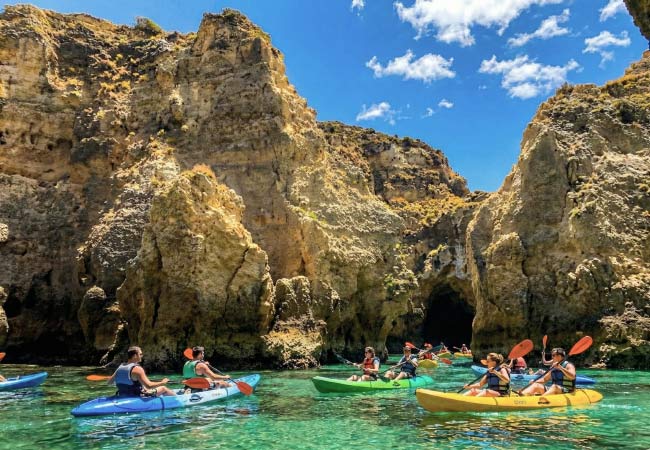
Boat and Kayak tours: To truly appreciate the Ponta da Piedade, you must explore it from the sea. It is only from here that the intricate complexity of the cliffs is revealed, with a myriad of arches, caves, and secluded bays. Converted fishing boats weave between the sea pillars, while kayaks allow you to land on secret beaches that are inaccessible by foot – click here to see some of the best Kayak and Boat tours
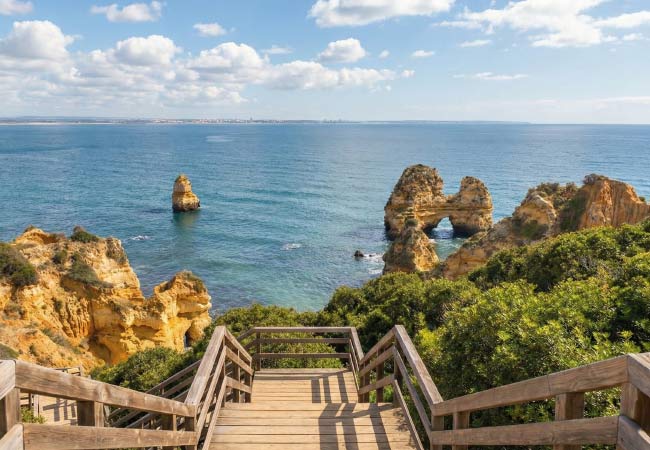
The Cliff-Top Boardwalk: For the finest views of the Western Algarve, follow the wooden boardwalk that winds along the cliff tops. This route offers a safe vantage point to admire the "Golden Coast" and its native wildflowers without venturing onto the unstable edges. It is particularly striking at sunset, with uninterrupted views stretching towards Sagres and the open Atlantic.
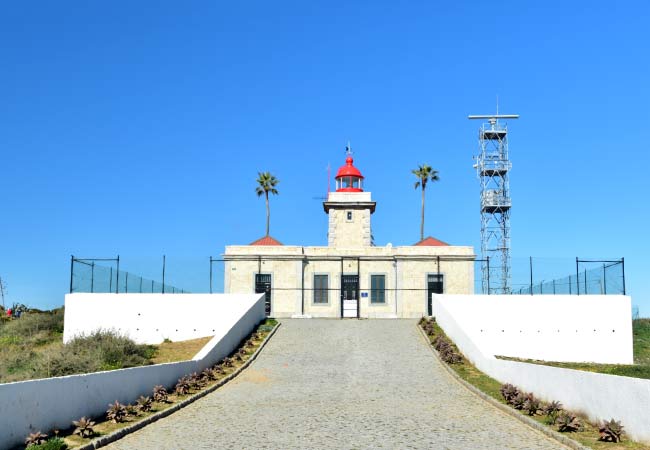
The Lighthouse (Farol): Standing 51 metres above the Atlantic, this lighthouse has guided ships since 1913. It occupies the exact footprint of the demolished Chapel of Our Lady of Mercy, marking a poignant transition from the site's past as a spiritual sanctuary to its present as a maritime landmark.
Ponta da Piedade Tourist Information
The Ponta da Piedade is free to visit, and access is unrestricted, allowing you to visit at any time of the day.
There is a large public car park near the lighthouse, but it struggles to cope with the site's immense popularity. During the peak summer months, this area fills rapidly, and you may be forced to park further down the road between 10am and 3pm, the peak visiting hours.
An Uber or Bolt from the centre of Lagos to the Ponta da Piedade will cost around €4, but there can be high demand and long waits for drivers at peak times.
For those who enjoy walking, the route from Lagos Old Town to the headland is incredibly scenic. The walk takes approximately 40 minutes, and the coastal footpath passes the Praia da Dona Ana and Praia do Camilo beaches. If you have bikes, there is a shared path for pedestrians and cyclists along the Estrada da Ponta da Piedade.
The network of wooden boardwalks ensures that the area is accessible to everyone. These walkways are suitable for visitors with limited mobility, children, and pushchairs.
Amenities at the Ponta da Piedade are functional rather than exceptional. The Sol Nascente restaurant is the only option for refreshments, but it is frequently crowded and serves standard tourist fare. Visitors should also be aware that the public toilets near the car park are basic and often poorly maintained.
Insight: For a truly memorable lunch or dinner, it is highly recommended to walk the ten minutes east to the O Camilo, a celebrated seafood restaurant that offers superior cuisine paired with magnificent coastal views.
The Geology and History of Ponta da Piedade
The Golden Cliffs
The iconic cliffs belong to the Miocene Epoch, dating back approximately 16 to 7 million years. While they appear to be solid stone from a distance, a closer look reveals that up to 90% of the rock volume is actually composed of fossils, ancient shells, coral fragments, and skeletal debris cemented together. The distinct golden-yellow hue, which flares brilliantly at sunset, is the result of iron oxide impurities oxidising within the limestone over millennia.
A Sacred Geography
Long before the lighthouse or the Christian chapel, this headland was known as Leixão da Cruz and served as a site of ancient solar worship. Local legends record that a massive, cantilevered stone archway once stood on the plateau, used by Roman conquerors to frame the rising sun as a temple to Sol Invictus (the Unconquered Sun).
From Chapel to Lighthouse
In 1580, the Ermida da Nossa Senhora da Piedade (Chapel of Our Lady of Mercy) was constructed on the promontory, establishing the site as a place of pilgrimage for sailors. However, in a controversial move that sparked local protests, the historic chapel was demolished to make way for the modern lighthouse, which was inaugurated on 1 July 1913.
Kayak Trips to the Ponta da Piedade
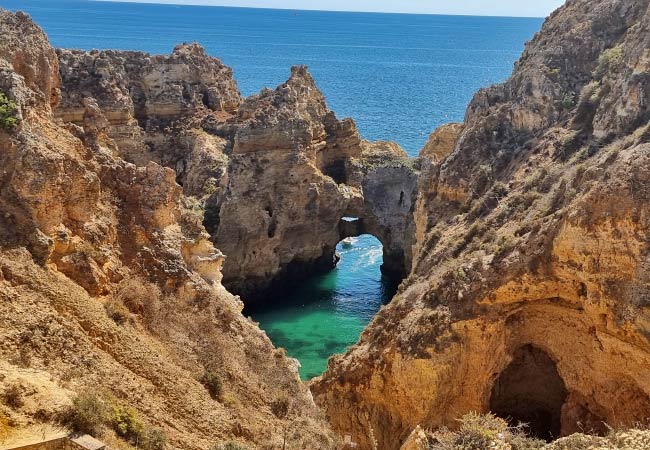
For those who wish to move beyond the role of spectator and truly engage with the coast, a guided kayak expedition offers an unmatched, immersive perspective. While motorised vessels must often keep a safe distance from the shallowest rocks, a kayak allows you to glide silently through the Ponta da Piedade’s most intricate features, entering narrow passages and grottos.
Modern kayak tours have streamlined the journey to the grottos. Rather than paddling from the harbour, you'll begin aboard a transport boat that carries you directly to the cliffs. These clever logistics ensure you arrive fresh, ready to dedicate your full energy to exploring the spectacular caves rather than the transit.
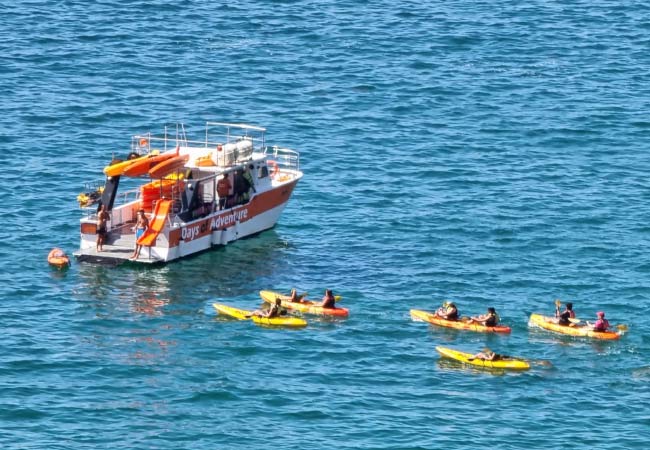
The kayak tour boat
Paddling in small, guided groups, visitors navigate the calm, turquoise waters at the base of the cliffs. The perspective from the waterline is unique; towering rock formations like "The Cathedral" rise vertically above, and guides share the local stories and secrets that define this dramatic geology.
Tours typically cost around €30 and last 2-3 hours, providing ample time to explore the sea caves. Morning departures are ideal, allowing you to paddle before the intense afternoon sun takes hold. Keep in mind that tours depend on calm weather conditions, as rough seas make cave exploration unsafe.
Some of the best kayak tours offered by GetYourGuide include:
• Explore Ponta da Piedade Sea Caves by Kayak
• Algarve Coast and Caves by Kayak

Boat Trips of the Ponta da Piedade
While kayak expeditions offer a physical connection to the Atlantic, a small boat tour remains the most popular and accessible method for exploring the grottoes. This option provides a relaxed vantage point, while benefiting from expert commentary on the region’s geology and maritime history.
Marina Departures
For the majority of visitors, departing from Lagos Marina is the recommended choice. Operators such as Bluefleet and Happy Time run 75-minute excursions that serve as a comprehensive tour of the wider coastline before reaching the headland.
The journey from the harbour transforms the trip into a coastal sightseeing tour. En route, you will pass the region's beautiful beaches, including the Praia da Batata and Pinhão, along with the golden cliffs of Dona Ana and Camilo Beach.
Upon reaching the Ponta da Piedade, the experience shifts. Skippers utilise highly manoeuvrable vessels specifically designed to thread through narrow arches and enter tight spaces. These guides are adept at navigating the complex rock formations, pointing out whimsical shapes that have earned local nicknames, such as the "Elephant," the "Kitchen" and even "General de Gaulle"!
These marina departure tours are an excellent option if you are visiting Lagos on a day trip, as they require no travel to the Ponta da Piedade. There is a range of vessels available, and they typically cost around €20 to €25 for a 75-minute tour. Some of the best options offered by GetYourGuide include:
• Bluefleet - Ponta da Piedade Guided Boat Tour
• Happy Time - Boat Cruise to Ponta da Piedade
Ponta da Piedade Departures
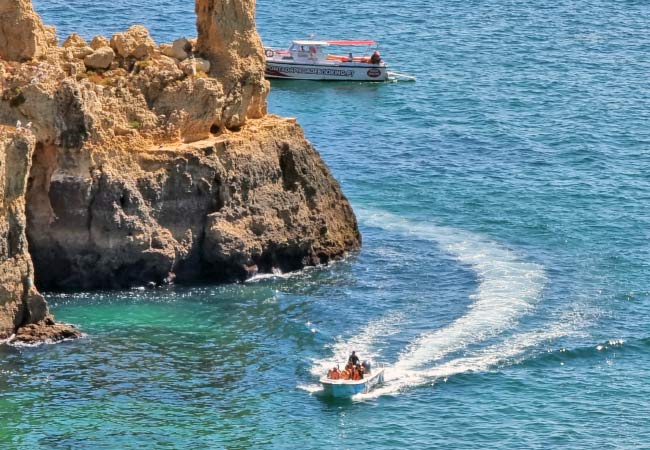
It is also possible to join boat tours directly from the water's edge at the Ponta da Piedade, departing from the historic fishing anchorage at the base of the cliffs.
This option is best suited for those who wish to combine a cliff-top walk with a sea-level excursion. However, visitors must be willing and able to descend, and subsequently climb back up, the steep 181 steps of the limestone staircase to reach the boats. These tours are more concise, lasting approximately 45 minutes and costing roughly €15. They focus purely on the grottoes without the coastal cruise from the town centre.
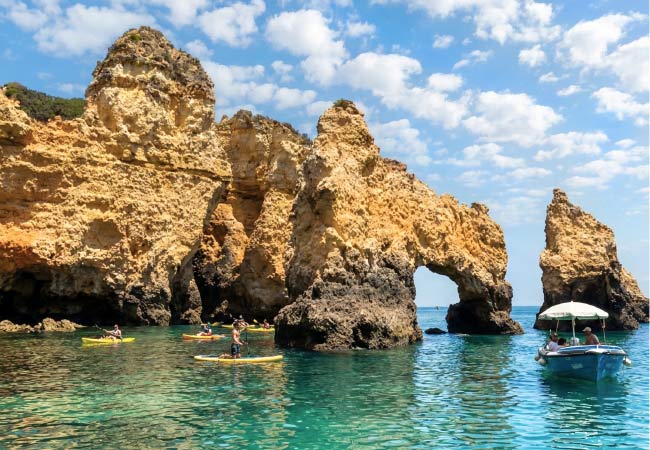
Rock Features of the Ponta da Piedade
Generations of local fishermen have created an elaborate naming system for the rock formations. As you navigate the coast, your guide will point out these stone sculptures:
• General de Gaulle: A distinctive rock profile that, when viewed from a specific angle, perfectly silhouettes the French general wearing his signature Kepi military hat.
• The Elephant (O Elefante): A massive sea stack where the rock has eroded to form a trunk dipping into the water, resembling a giant elephant taking a drink.
• The Cathedral (A Catedral): A majestic sea arch with a high, vaulted roof that mimics the interior of a Gothic cathedral, creating a spiritual atmosphere as light plays off the water inside.
• The Kitchen (A Cozinha): A grotto named not for its shape, but for the sound of the churning water within, which resembles boiling pots.
Keep an eye out for "The Kissing Couple," two tall pillars that appear to lean into an eternal embrace, and "The Submarine," a low, elongated rock formation that mimics the deck and conning tower of a surfaced vessel.
As you enter the darkened caves, the atmosphere shifts from playful to mysterious. Guides often share local legends of the Moura Encantada (Enchanted Moorish Maiden), a myth rooted in the time of the Reconquista. These spectral figures are said to be Moorish princesses, enchanted by their fathers to guard hidden treasures within the grottoes. According to folklore, they appear as women combing their golden hair, waiting for a champion to break their curse.
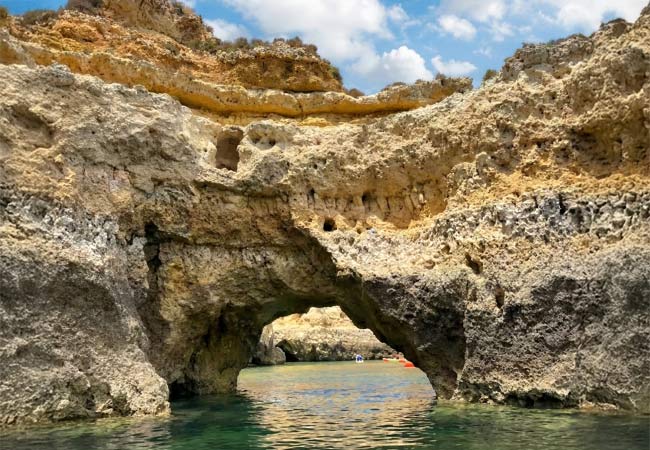
The Ponta da Piedade Boardwalk
For the finest views of the Western Algarve, follow the wooden boardwalk that winds along the western cliff tops. Extending from the lighthouse, the path skirts the cliffs above Praia do Barranco do Martinho towards Praia do Canavial, offering a safe vantage point to admire the coast without venturing onto unstable edges.
The walkway is wide, flat, and entirely step-free, making it accessible for visitors with limited mobility and families with children. Four railed viewing platforms project over the cliffs, providing dramatic vertical views into the coves below, while shaded seating areas offer a place to rest.
The route is particularly striking at sunset or in spring when the headland blooms with wildflowers. For those wishing to extend their walk, a footpath continues towards the large beach of Praia de Porto de Mós, though visitors should note that this specific section heads inland through residential districts rather than following the coastline.
Important warning: The Ponta da Piedade has unstable cliffs, with sheer drops and uneven pathways. Every year careless tourists slip to their death while trying to take the perfect Instagram photo or selfie.
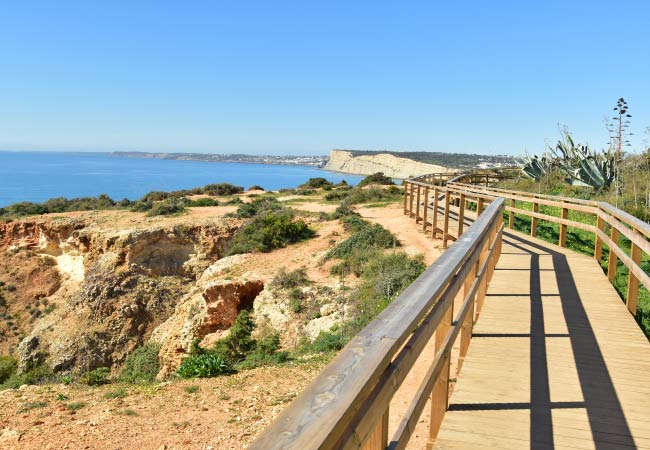
Nature at the Ponta da Piedade
While the Ponta da Piedade is primarily visited for its dramatic geology, the headland supports a surprising diversity of wildlife adapted to this exposed, saline environment.
Birdlife
The cliffs serve as a vital sanctuary for birdlife. The most prominent residents are the Cattle Egrets, which nest here in significant numbers. From the cliff tops, you can often see them as white specks resting on the stack rocks or flying in formation against the blue sky.
The area is also a hunting ground for birds of prey; Kestrels are frequently spotted hovering on the updrafts, while Peregrine Falcons use the inaccessible cliff ledges to nest safely away from predators. In the late afternoons, huge flocks of Swifts can be seen darting around the lighthouse.
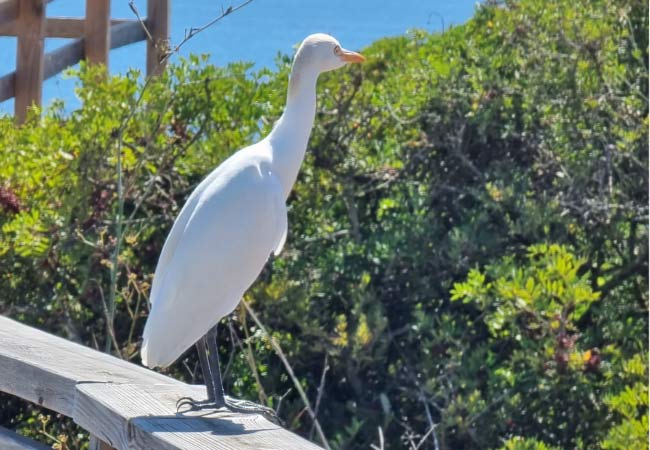
Flora
During the spring months, the windswept scrubland transforms with colour. The limestone soil supports hardy wildflowers that bloom from January through late spring. Visitors will find yellow Sea Asters, sweet-smelling Alyssum, and vibrant patches of "Hottentot Fig" (a type of succulent) draping over the cliff edges.
These plants have adapted to the harsh Atlantic winds and salt spray, creating a layer of greenery that contrasts sharply with the golden rock. The introduction of the boardwalks has allowed native flora to recover from foot traffic, including wild figs and rare wildflowers that were previously trampled.
Discover more of Lagos with our most popular guides


About this guide: I am Philip Giddings. I live in Lisbon with my Portuguese wife, Carla, whose family and friends are in the Algarve, and I am down in Lagos most months to research these guides, which are now my full-time work. I made my first trip to Portugal in 2001 and have written independent guides since 2009.
My Lagos guides are part of a wider set of almost 2,000 I have written across Portugal. No tourist board, tour operator, or attraction pays to be included, and the site is funded by affiliate commissions on tour and accommodation bookings, disclosed on every page that carries them. Every practical detail (ticket prices, opening hours, bus routes, boat-tour policies) is checked against the official sources and confirmed in person on the trips I make through the year. Read my full story here.